
How to Become a Content Creator in 2026: Your Complete Roadmap to Success
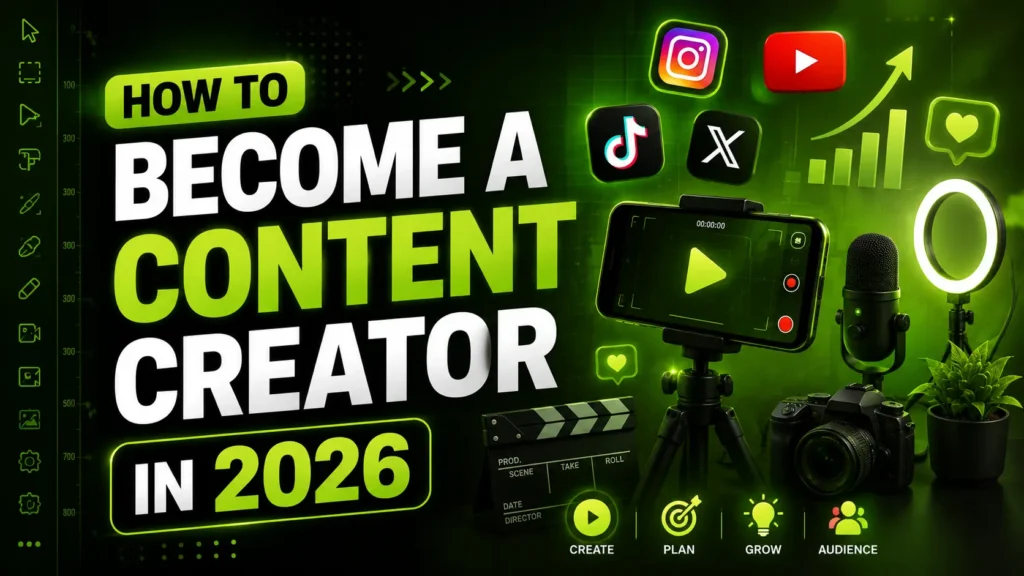
Look, if you’re reading this right now in 2026, you probably already know that content creation isn’t just some random trend anymore. It’s literally changed how people discover services, decide who to trust, and where to spend their money. Whether you’re a digital marketer in Kerala trying to build your personal brand or someone just looking for another income stream, becoming a content creator isn’t optional anymore. It’s almost essential.
But here’s what nobody actually tells you: content creation doesn’t require you to be naturally good on camera or have some fancy professional setup. It just needs you to show up consistently, understand who you’re talking to, and build what I call your creation muscle over time.
Let me tell you exactly how to get started in 2026, based on what actually works.
The Real Truth About Content Creation That Nobody Mentions
Before we get into the how to part, let’s be honest about something. You might think all those successful content creators were just born confident or naturally charismatic. That’s rarely the actual story.
The real problem that stops most people from starting isn’t talent at all. It’s fear. Fear of people judging you, fear of looking awkward on camera, fear of what your friends and family might think. This fear is what gets people stuck, and they never actually begin.
The good news? Once you push through that initial nervousness and post your first video, something actually changes. Your second video doesn’t feel as scary. By your tenth video, you stop thinking about how you look and just focus on what you’re saying. That’s when things actually start happening.
What You Actually Get From Content Creation
Before you invest your time in this, you should know what you’re really building toward. Content creation in 2026 isn’t just about collecting likes and followers anymore.
Benefit One: You Become Your Own Marketing Team
Think about how things worked traditionally. If you run a freelance business as a freelance digital marketer in Kerala, you’d usually need to spend money on advertising, maybe hire someone to handle marketing, hope you rank on Google at some point, and wait months or even years to see real results.
Content creation flips this whole thing on its head. Every single piece of content you create, whether it’s a short video or a detailed LinkedIn post, works for you even when you’re sleeping. Someone in Kochi might discover you at midnight, see your work, and suddenly think you’re exactly who they need.
I’ve seen this happen with several marketers from Kerala. One person started posting about SEO strategy on LinkedIn. After about three months, clients started reaching out. Not because the post went viral, but because the right people found exactly what they were looking for at the right time.
Benefit Two: You Build Real Credibility Without Waiting For Degrees
Here’s something interesting about how things work in 2026: what matters more now is what you can actually demonstrate, not just credentials on paper. A content creator who’s been consistently sharing high quality content for three months can have more influence than someone with a fancy degree who doesn’t show their work.
Why? Because your audience can literally watch you think and work in real time. They see your actual experience. They trust you not because of certificates, but because you’ve earned their attention again and again.
Benefit Three: Money Comes From Multiple Directions
Once you become someone people actually notice, income starts flowing from different sources at the same time. Brands reach out and pay you to promote their products. Clients contact you directly because they’ve seen your work. You can eventually create courses or digital products. You get invited to speak at events. You make money from affiliate commissions on tools you recommend.
The best part is that this usually happens naturally. You’re not desperately chasing every opportunity. People are finding you because of what you’ve been sharing.
Benefit Four: You Actually Own Your Platform
Here’s the thing that most people miss. If you depend on a job or one company, that’s their business, not yours. But when you build through content, your audience is following you, not your employer. If you ever want to launch something, change careers, or start something new, your audience comes with you. That’s real ownership.
How Content Creation Directly Gets You Freelance Clients
Let’s talk about something practical that most people don’t realize. One of the best parts of content creation is how it leads directly to freelance work.
Direct Client Inquiries Just Happen
Here’s how it actually works: You start posting about what you know. Someone sees three or four of your posts and thinks, “This person clearly knows their stuff.” They check your profile or reach out to you. Before you know it, you’re having a real conversation about working together.
This isn’t just theory. If you’re a digital marketer in Kerala consistently posting about Google Ads strategy, SEO tips, or content marketing approaches, you’re basically showing potential clients your actual work before they even hire you. That’s powerful.
I know several freelancers who built six figure businesses almost entirely through content. No awkward cold emails. No bidding wars on marketplace platforms. Just regular visibility that turned into paying clients.
Better Clients, Better Rates
When someone finds you through your content instead of a marketplace, something shifts in how they see you. They don’t try to negotiate your price because they’re not comparing you to ten other people. They already see you as someone who knows what they’re doing.
Compare that to a freelancer on Upwork with no real presence. They’re fighting to prove they’re worth more than the cheapest option. But you? You’re already established as someone with expertise.
You Choose Your Clients
Here’s something most people don’t think about: content helps you attract exactly the kind of clients you actually want to work with. When you’re clear about what you specialize in, maybe healthcare marketing, e commerce, SaaS, or digital services for Kerala based businesses, your content naturally attracts people in that space. You’re not taking whoever will hire you anymore. You’re building a pipeline of ideal clients who already understand what you do.
Why Clients Actually Prefer Working With Content Creators
If you’re thinking about building a freelance business, it’s important to understand why clients love hiring people with a content presence.
The Trust Already Exists
A client who’s followed your content for weeks or months doesn’t need to be convinced about anything. They already know how you think, what you care about, and whether your communication style works for them. The whole sales process becomes a natural conversation, not a hard pitch.
They've Already Seen You Work
Your content is basically your portfolio in action. A potential client isn’t wondering if you can actually deliver. They’ve seen you share insights publicly and help people solve real problems. That’s incredibly powerful.
Clients Stay Longer
People who hire you through content tend to stick around longer and are usually happier with the work. Why? Because there’s already a real relationship established. You’re not starting from nothing. You’re continuing a conversation that began when they saw your content.
Building Your Content Creation Muscle: The Framework That Actually Works
Here’s where most people get stuck. They start creating content and then quit after two weeks because they haven’t seen results yet or they hate watching themselves on camera.
Understanding your creation muscle is absolutely crucial if you want this to work.
Phase One: Get Past The Initial Fear (Weeks 1 to 2)
The biggest barrier isn’t actually skill. It’s just fear. Plain and simple.
Here’s what you do: Pick up your phone, any phone you already have. Open the camera app. Talk about something you understand for thirty or forty seconds. It doesn’t have to be perfect. It doesn’t need great lighting. It doesn’t even have to be about your main area of expertise. You could talk about your morning, something you learned, a book you’re reading, anything.
Then edit it if you want using free tools like CapCut (seriously, it’s incredible for beginners), whatever editing tool your phone has built in, or Instagram’s native editing features which even work fine.
Then just post it. No second guessing. Just publish.
Your first few videos will feel terrifying. You’ll have a voice in your head telling you it’s not good enough. But here’s the actual truth: most people are too busy with their own lives to judge you. And if someone does judge you? That’s about them, not you.
Phase Two: Build Consistency (Weeks 3 to 12)
After you’ve broken through that initial fear barrier, it’s time to build the actual habit. This phase isn’t glamorous, but it’s essential.
I call it the 50 Video Rule. Your goal is to create and share your first 50 pieces of content expecting basically nothing in return. No viral moments. No sudden explosion in followers. No client inquiries ringing your phone constantly.
This might sound strange, but here’s why it works: your first 50 videos are your practice ground. You’re improving three main things. First, your confidence on camera improves because you stop thinking about how you look and start thinking about your message. Second, your communication skills get sharper because you learn to explain complex ideas in simple ways. Third, editing and filming become automatic because you’ve done it so many times.
During this phase, don’t worry about getting perfect audio, fancy transitions, or figuring out your exact niche right now, or optimizing everything for the algorithm. Just focus on showing up and improving a little bit each time.
Finding Your Niche As You Go
Here’s something people get wrong: you don’t need to know your niche before you start. You discover it as you create.
Maybe you start talking about digital marketing broadly, and you realize you love discussing SEO more than anything else. Or you start with business content and find that your audience responds best to your personal development insights. Maybe you’re a designer from Thiruvananthapuram and you discover that your best content is about web design for e commerce brands.
The content creation process itself teaches you what resonates. Trust that learning.
Phase Three: Strategic Optimization (Month 4 and Beyond)
Only after you’ve built the habit and improved your core skills should you think about strategy. Now you ask real questions: what type of content actually gets engagement? What makes people save, share, or comment? What’s driving actual results?
At this stage, study creators in your space. Not to copy them, but to understand what works. If you’re a digital marketer from Kerala noticing that video breakdowns of local marketing trends get great engagement, that’s data. That’s strategy.
You start tailoring your content to your actual goals. If you want freelance clients, create content that showcases problems you solve. If you want brand collaborations, create content that demonstrates audience connection. If you want to build a course, create content that hooks people into your teaching style.
But here’s the critical warning: don’t skip to this phase. The biggest mistake beginners make is obsessing over metrics before they’ve built the foundation. That’s why most people quit.
Creating Content That Actually Attracts Freelance Clients
Now let’s get specific. You’re not creating content just for vanity. You’re creating it to attract the right people who’ll pay for your services.
Content Positioning for Freelancers
If you’re a freelance digital marketer in Kerala, your content strategy should revolve around several key types. Educational breakdowns where you share how you’d approach a client’s problem. Behind the scenes insights where you show your work. Results focused stories that show impact without oversharing client information. Common mistakes content that positions you as someone who prevents problems.
For example, you could post “Here’s how I’d optimize an e commerce store’s Google Shopping feed” or “Three reasons why your Facebook ads are underperforming.” Share the thought process behind a strategy. Show how you fixed a problem. Talk about the number one mistake freelance marketers make with LinkedIn outreach. This all creates urgency and positions you as experienced.
The Visibility to Credibility to Profitability Cycle
This is the real framework. Let me break it down for you.
Visibility means people need to know you exist. This is your content appearing consistently in their feed. Credibility comes from repeated visibility building trust. When someone sees you across multiple platforms like LinkedIn, YouTube, Instagram sharing valuable insights, they start to believe you know your stuff. Profitability comes from high credibility leading to people willing to pay for your time. They’re not price shopping. They’re asking for your availability.
Most people skip the first two and wonder why freelancing feels hard. Content isn’t a shortcut to money. It’s the foundation for sustainable, high paying client relationships.
The Content Creation Timeline: What to Realistically Expect
Let’s be honest about timelines. Content creation isn’t a get rich quick scheme, and knowing what to expect keeps you from quitting prematurely.
Month one, you’re learning. You feel awkward. Some videos are great, some are terrible. You might get zero engagement. This is normal.
Months two to three, the creation process becomes easier, but results are still minimal. You’re building the muscle. Keep showing up.
Months four to six, you might see your first meaningful engagement. A few comments. Some followers who actually care. This is where it starts feeling real.
Months seven to nine, first client inquiries likely arrive around here. Not floods, but real conversations with people who found you through your content.
Month ten and beyond, if you’ve been consistent, you’ll notice a compounding effect. Effort stays the same. Results accelerate.
The key insight here is that you need to remove the pressure of immediate results. If you’re creating content only to make money in the first month, you’ll quit. If you’re creating content because it’s the right long term play, you’ll last long enough to see traction.
Tools You Actually Need (Not the Ones Everyone Recommends)
Here’s the refreshing truth: you don’t need expensive equipment.
For recording, just use your smartphone. Yes, really, that’s it.
For editing, use CapCut which is free and powerful, Adobe Premiere Rush if you want something premium, or your phone’s native editor which is honestly sufficient to start.
For planning, use Google Docs for scripting, Google Calendar for consistency scheduling, or Notion if you want fancier organization.
For uploading, use YouTube for long form, LinkedIn for professional positioning, or Instagram if your audience is there.
That’s it. You don’t need a ring light, a fancy microphone, or a green screen to start. You need consistency and clear thinking. You need someone from Kochi who can explain her SaaS service well on a phone camera. You need a web developer from Thiruvananthapuram who can record short videos about web development trends using his phone. That’s all that matters.
The Real Why: Why You Should Actually Do This
Before you commit, let’s talk about what’s really in it for you.
If you’re a digital marketer in Kerala wondering if this is worth the effort, consider the security aspect. You’re not dependent on a single employer. Your brand is an asset that generates opportunities. Consider authenticity. You get to be yourself. You don’t need to play corporate politics or fit into someone’s expectations.
Think about scalability. Content works while you sleep. A video you record once can bring clients for years. Consider positioning. You get to define how the market sees you, rather than competing on whoever offers the lowest bid. Think about impact. You’re genuinely helping people. That creates a sense of purpose that traditional freelancing sometimes lacks.
Is it work? Absolutely. Will it require showing up when you don’t feel like it? Yes. But the upside, both financially and personally, is substantial.
The Framework to Get Started Tomorrow
Don’t overthink this. Here’s exactly what to do.
Tomorrow, record a thirty second video on your phone talking about something you know. Edit it using CapCut which takes ten minutes to learn. Post it to one platform, LinkedIn if you’re B2B, Instagram if you’re B2C. Do the same thing the next day.
For the next thirty days, create and post one piece of content daily. It doesn’t need to be different. You can repurpose. Record one video and turn it into five pieces of content for different platforms.
After thirty days, evaluate. What felt natural? What got engagement? Double down on that. Keep going.
You don’t need a perfect plan. You need to start.
Final Thoughts: Content Creation Isn't Optional Anymore
In 2026, being a freelance digital marketer in Kerala, or any service provider really, without a content presence feels like running a restaurant without a storefront. Or opening a shop in Kochi but not telling anyone it’s there.
People want to know who they’re working with. They want to see how you think, what you value, and whether you can actually deliver. Content is how you prove all of that.
The beautiful part? You don’t need to be the best. You just need to be consistent, helpful, and genuine. Those three things compound over time into something remarkable.
So record that first video. Don’t wait for the perfect setup or the perfect idea. Your future clients are looking for you right now. And the best way to be found is to start showing up.
Your content creation journey starts with one video. Then another. Then fifty. And somewhere along the way, it stops being scary and becomes second nature.
That’s when the real opportunities show up. That’s when a freelancer from Thiruvananthapuram starts getting inquiries from Kochi, from Bangalore, from all over because of consistent, helpful content. That’s when you realize this was worth it.
Ready to get started? You have everything you need right now. Your phone. Your knowledge. Your authenticity. That’s your starting point.
"Get Your Free Marketing Growth Consultation"
Let's Connect
Let’s talk! Whether you’re just starting out online or want to fix what’s not working, I’m here to help. As the best digital marketing strategist in Wayanad, I focus on what actually works for your business. Shoot me a message and we’ll figure out the best path forward.”
1 thought on “How to Become a Content Creator in 2026”
Hey very cool blog!! Guy .. Beautiful .. Wonderful .. I’ll bookmark your web site and take the feeds additionallyKI’m glad to find numerous helpful information here in the publish, we’d like develop extra techniques on this regard, thank you for sharing. . . . . .